
ground temperature
Type of resources
Available actions
Topics
Keywords
Contact for the resource
Provided by
Years
Formats
Representation types
-
Daily meteorological data (2m height) between 2004 to 2015 with air temperaturein 2m height (mean, minimum, maximum), precipitation and minimum ground temperature (5cm height)
-
Daily standard meteorological data from Fülöpháza which are representative for the whole KISKUN LTER. The station is operated jointly by Centre for Ecological Research, Hungarian Academy of Sciences and Hungarian Meteorological Service. The measured data: air, ground, soil temperature, precipitation, air humidity, wind speed, soil moisture, atmospheric pressure and global radiation.
-
Monthly standard meteorological data from Fülöpháza which are representative for the whole KISKUN LTER. The station is operated jointly by Centre for Ecological Research, Hungarian Academy of Sciences and Hungarian Meteorological Service. The measured data: air, ground, soil temperature, precipitation, air humidity, wind speed, soil moisture, atmospheric pressure and global radiation.
-
Meteorology data for Park Shaked - Israel Park Shaked LTER station (31.267 N, 34.653 E) Average Air Temp Maximum Air Temp Minimum Air Temp Maximun Relative Humidity Minimum Relative Humidity Maximum Temparture Deficit Minimum Temparture Deficit Average Vapor Pressure Deficit Average Vapor Pressure Maximum Barometric Pressure Minimum Barometric Pressure Maximum Solar Insolation Total Solar Radiation Average Wind Speed Maximum Wind Speed Ground Temp. 25cm depth Ground Temp. 50cm depth Ground Moisture 25cm depth Ground Moisture 50cm depth Total Rain Min DataLogger Battery Level Min Cellphone Battery Level
-
Daily standard meteorological data from Fülöpháza which are representative for the whole KISKUN LTER. The station is operated jointly by Centre for Ecological Research, Hungarian Academy of Sciences and Hungarian Meteorological Service. The measured data: air, ground, soil temperature, precipitation, air humidity, wind speed, soil moisture, atmospheric pressure and global radiation.
-
Monthly standard meteorological data from Fülöpháza which are representative for the whole KISKUN LTER. The station is operated jointly by Centre for Ecological Research, Hungarian Academy of Sciences and Hungarian Meteorological Service. The measured data: air, ground, soil temperature, precipitation, air humidity, wind speed, soil moisture, atmospheric pressure and global radiation.
-
High resolution hydrology recording mainly by PLSC_Sensors (measuring water level, temperature-depending on water level it is the ground air temperature or water temperature- and conductivity) but also by Hydrolab-Multiparameter Sensors (measuring temperature, oxygen, pH, conductivity, turbidity) for monitoring the soda pans in the vicinity of soda Lake Neusiedl. The on-line measurement of these wetland sensors in the “Seewinkel”-district are measuring at high time resolution of every three minutes. The locations of these sensors are in the soda pans, which mostly dry out at least once a year, and are as follows (in alphabetical order): Hydrolab-Waterquality_Multiparameter-Sensor - Fuchslochlacke: N47°47.376’ & E016°51.149’ PLSC-Sensor - Fuchslochlacke: N47°47.376’ & E016°51.149’ PLSC-Sensor - Graurinderkoppel: N47°43.400’ & E016°48.148’ PLSC-Sensor - Meierhof-Lacke (Apetloner Hof): N47°43.296’ & E016°49.359’ PLSC-Sensor - Unterer Stinker: N47°48.161’ & E016°47.098’
-
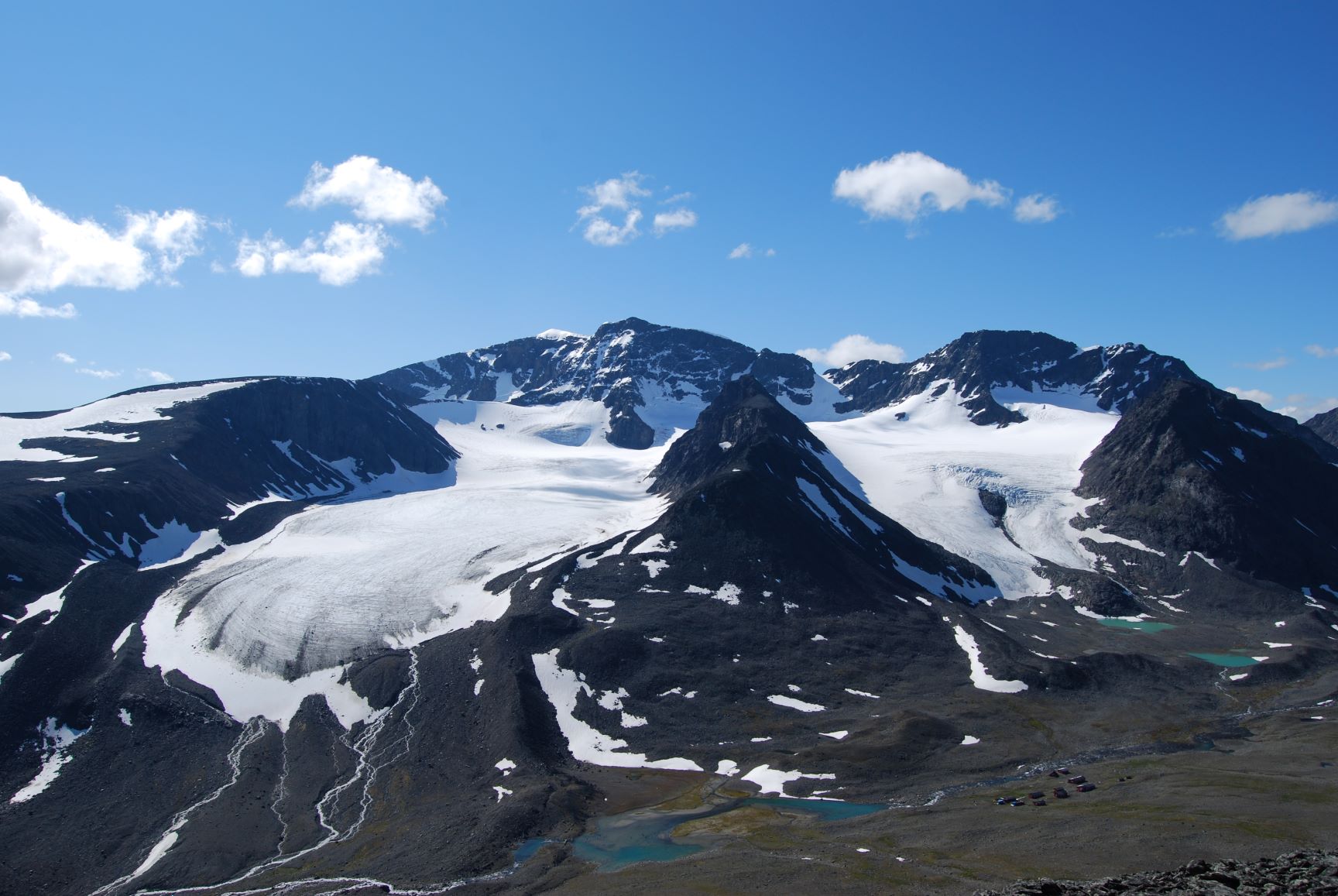
Tarfala Research Station is located at 1130 m a.s.l. in the high alpine Kebnekaise mountains, northern Sweden. The Tarfala valley catchment reaches from 2100 to 500 m a.s.l. Vegetation spans high alpine flora, mountain heath and meadows and the upper mountain birch forest zone. The lake, rivers and glacier meltwater streams is part of the headwaters for the unregulated Kalix River. The station was established in 1946 with the main aim to study glacier massbalance. The best known glacier is Storglaciären which is one of the most well studied glaciers in the world. The glaciers and terrestrial and aquatic ecosystems formed by the harsch climate in this area is now changing rapidly. Over the years the environmental monitoring program has expanded and includes today mountain meteorology, water discharge and chemistry, permafrost and vegetation. The station belongs to Stockholm University and is part of the Swedish Infrastructure for Ecosystem Science (SITES).
-
This site experienced peat extraction. It contains Sphagnum plots and Vaccinium oxycoccos, but the peatland is dominated by graminoids forming tussocks.
-
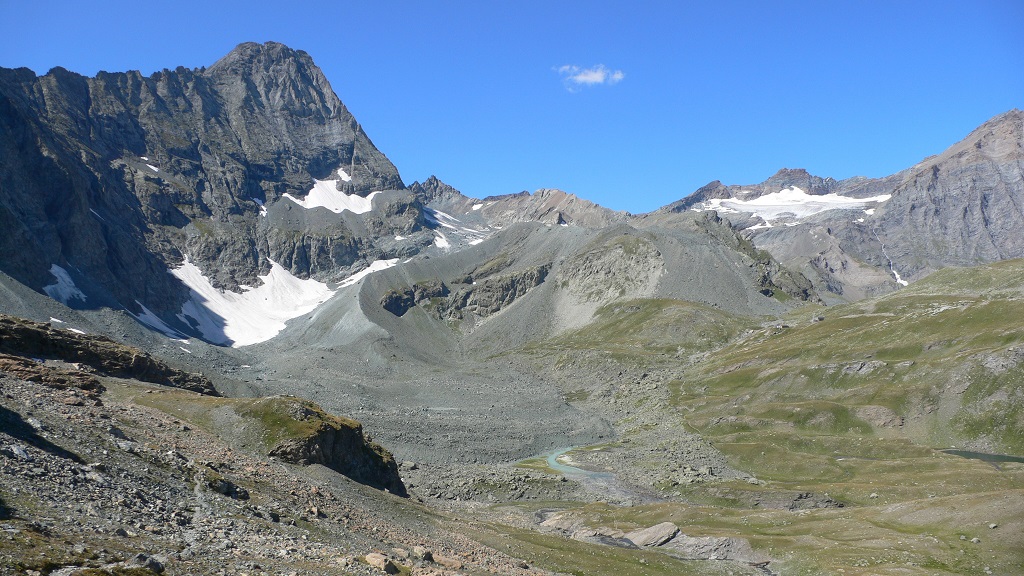
The Bessanese high-elevation experimental site is located in the Western European Alps (Graian Alps, municipality of Balme, Italy). This site is representative of the glacial and periglacial environments of the Alps. In this site, glaciers have been the main morphogenetic agent: the head of the basin hosts a well-developed glacial cirque, while the LIA has left an imposing moraine on the left side of the glacier as an indelible mark in the landscape. Additional cryogenic and atmospheric processes, running waters and gravity have contributed to shape the study area. These latter processes are becoming more and more important, compared to glacier shaping, in the present context of climate change, which led to an impressive-areal and volume reduction of the glacier. Most of the area once occupied by the glacier is now covered with debris which, in many cases, is ice-cored, or contains ice lenses. Downstream of the main lake of the basin, located at an elevation of about 2580 m, the debris forms a large and characteristic rock glacier. Among gravitative processes, rockfalls are particularly common and relevant from the hazard point of view in the study area. dataset available on Pangaea repository: 1. Nigrelli, Guido; Chiarle, Marta; Merlone, Andrea; Coppa, Graziano; Musacchio, Chiara (2022) – Rock temperature variability in the alpine cryosphere. Pangaea Data Publisher for Earth & Environmental Science, https://doi.pangaea.de/10.1594/PANGAEA.950246 2. Nigrelli, Guido; Barbero, Secondo; Chiarle, Marta (2021) – Solar radiation at the Bessanese high-elevation experimental site (Italy). Pangaea Data Publisher for Earth & Environmental Science, https://doi.org/10.1594/PANGAEA.930679 3. Nigrelli, Guido; Chiarle, Marta; Merlone, Andrea; Coppa, Graziano; Musacchio, Chiara (2018) – Rock and debris temperature in the alpine cryosphere. Pangaea Data Publisher for Earth & Environmental Science, https://doi.org/10.1594/PANGAEA.894317